One of the most common questions we get from homeowners planning a reroof is deceptively simple: "should I go with asphalt shingles or a torch-on membrane?" The honest answer is that it isn't really a matter of preference — it comes down almost entirely to your roof's slope. But within that, there's still a lot to weigh in terms of cost, lifespan, appearance and maintenance. Here's how we walk homeowners through the decision.
The First Question: What's Your Roof's Pitch?
Before cost or appearance even enter the conversation, slope decides most of this for you:
- Pitched roofs (roughly 3:12 slope or steeper) are built for asphalt shingles, wood shakes, or metal. Water needs to run off quickly, and shingles rely on gravity and overlap to shed it.
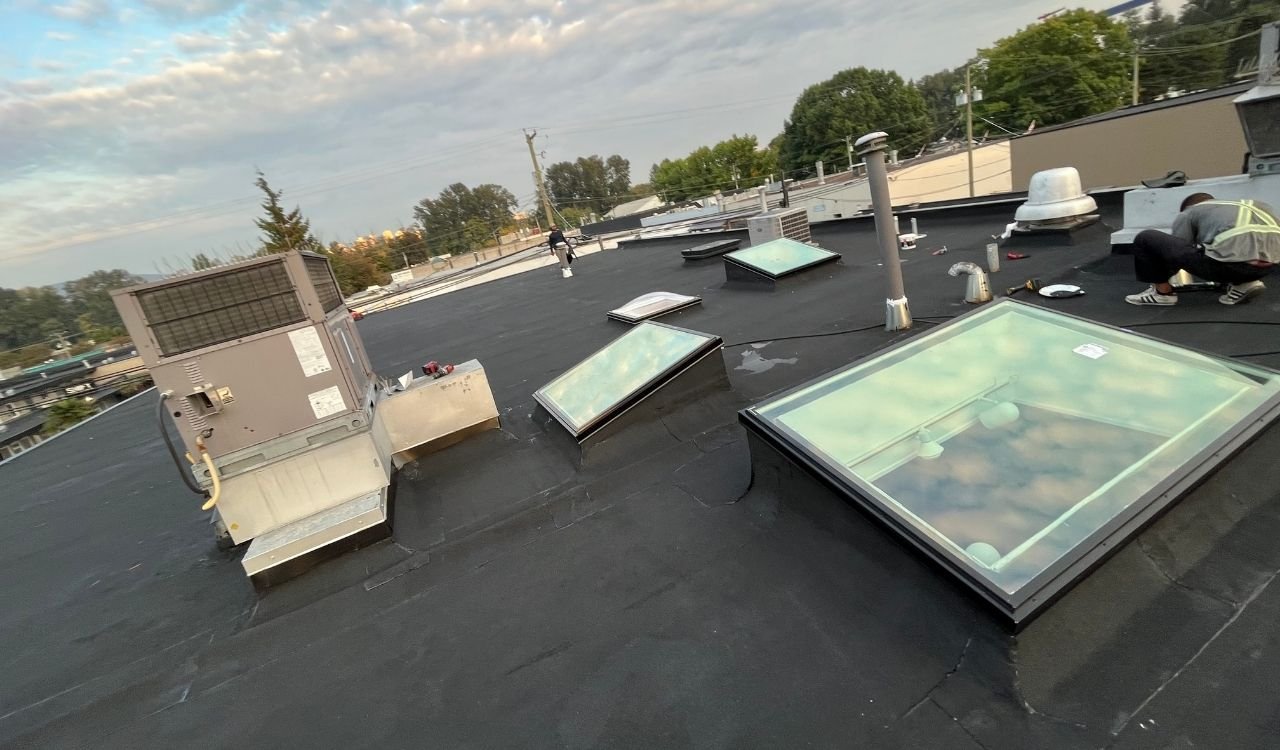
- Flat or low-slope roofs (under about 2:12) can't rely on gravity the same way, so they need a continuous, fully sealed membrane — which is where torch-on modified bitumen comes in.
If your home has a traditional pitched roof, torch-on membrane generally isn't an option (or a good idea) at all. If you have a flat-roofed addition, garage, or laneway home, asphalt shingles usually aren't either. Most of the homes we work on in Vancouver, Surrey and Richmond actually have both — a shingled main roof and a flat torch-on section over a rear addition or garage — so this isn't always an either/or decision for the whole property.
Asphalt Shingles: The Standard For Pitched Roofs
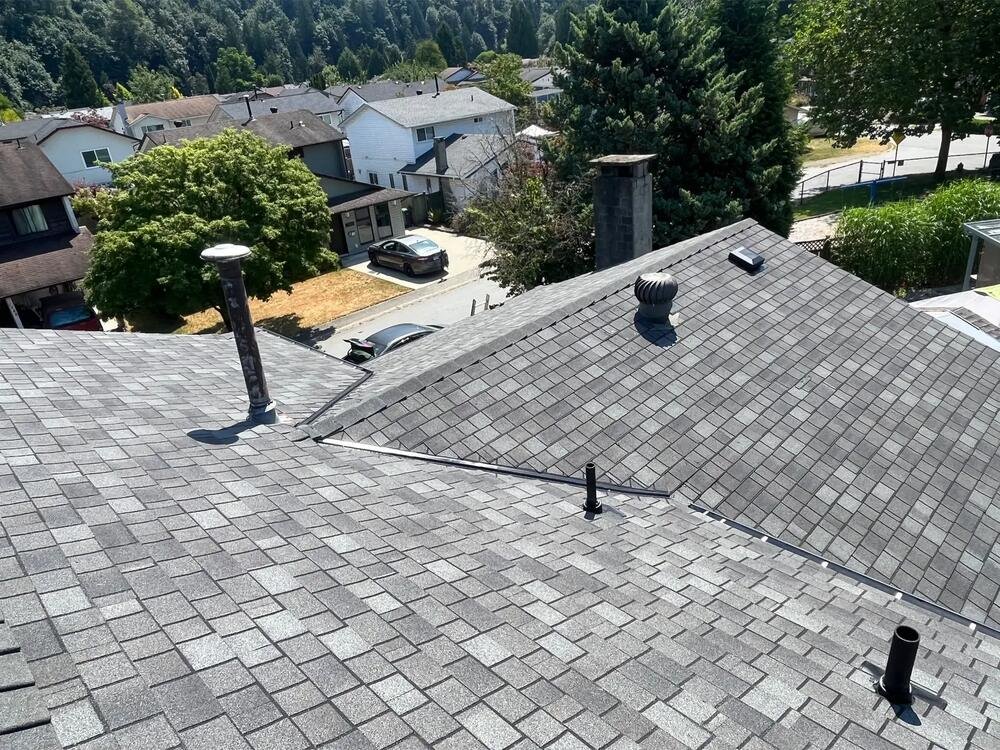
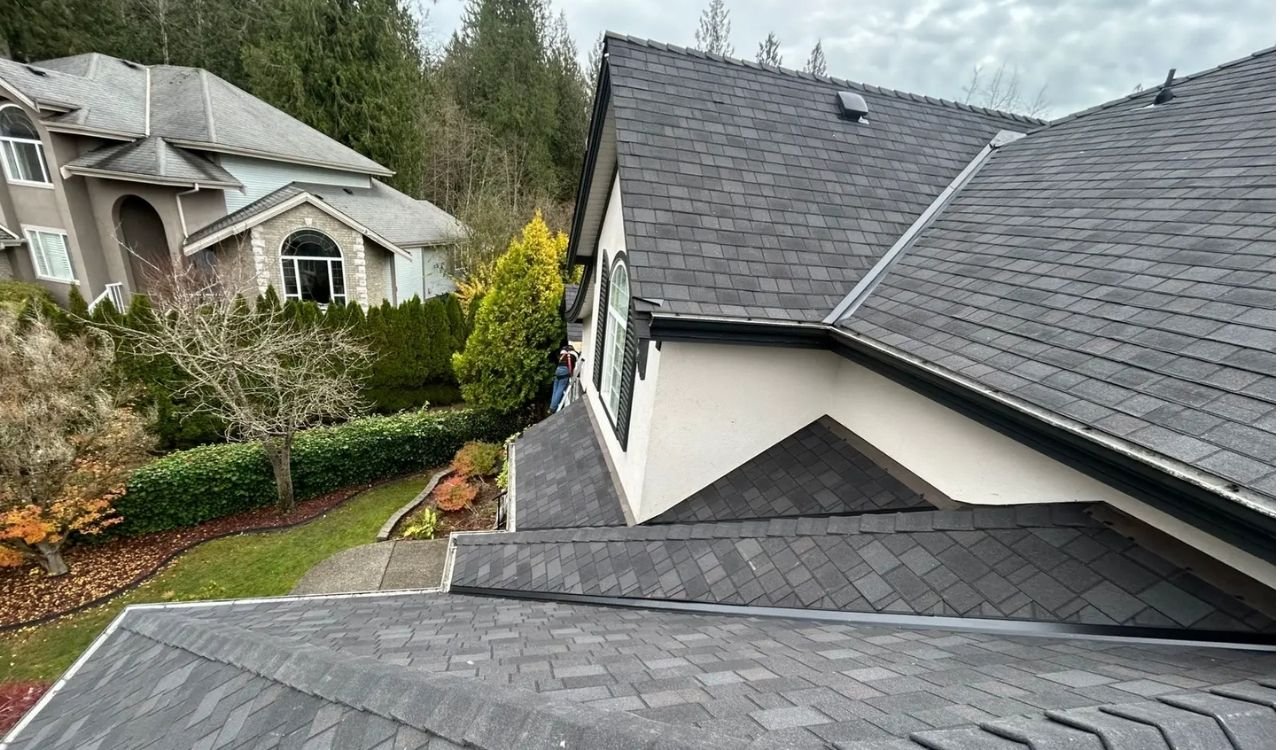
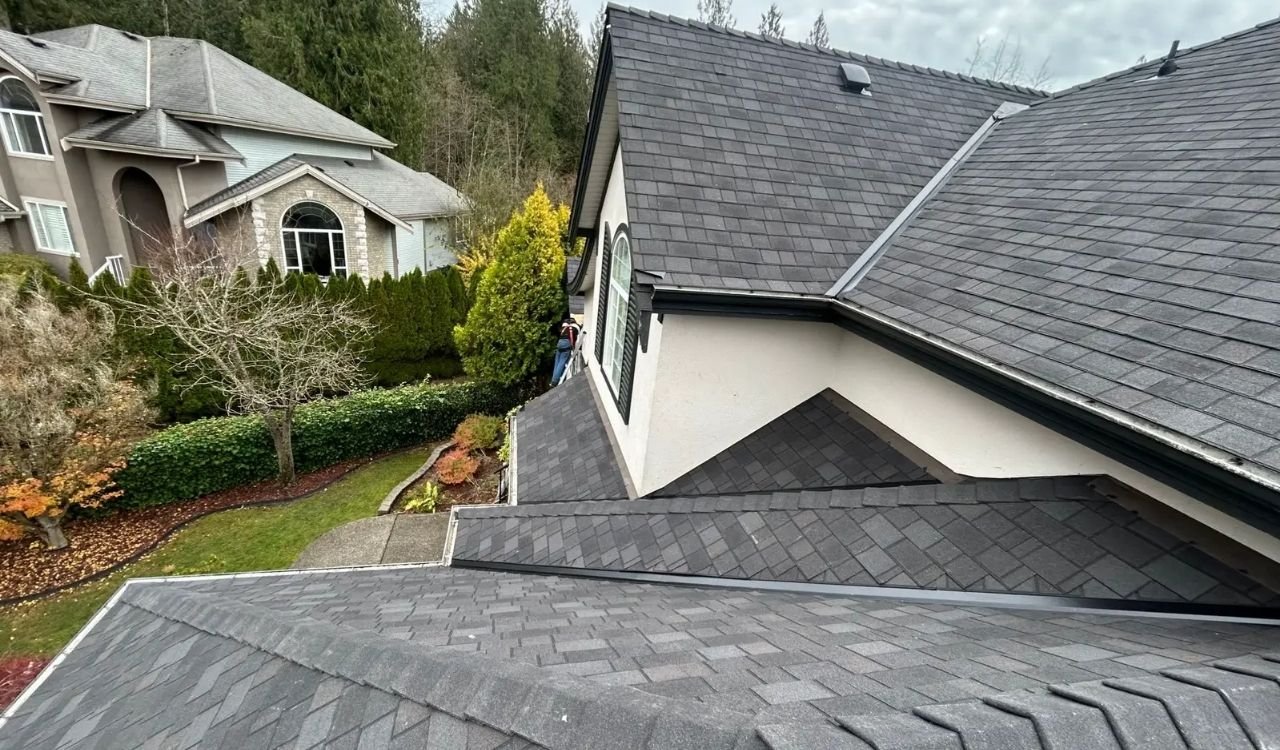
Asphalt architectural shingles are the default choice for the vast majority of pitched residential roofs in BC, and for good reason. They balance cost, appearance and durability better than almost any alternative for typical single-family homes.
- Lifespan: 25–30 years for quality architectural shingles, properly installed and maintained.
- Cost: The most affordable pitched-roof material per square foot, with a wide range of colour and style options.
- Appearance: Available in dozens of colours and textures that suit everything from character homes to new builds.
- Maintenance: Straightforward — periodic inspections, moss treatment, and occasional spot repairs to individual shingles or flashing.
- Installation time: A typical single-family reroof takes 2–5 days depending on size and complexity.
Torch-On Membrane: Built For Flat & Low-Slope Roofs
Torch-on (modified bitumen) roofing is applied in overlapping sheets that are heat-welded at every seam, creating a single, continuous waterproof membrane. It's the standard choice for flat and low-slope sections because it doesn't rely on shedding water — it's designed to handle standing water without leaking.
- Lifespan: 15–20 years, sometimes longer with a well-maintained cap sheet and regular inspections.
- Cost: Generally higher per square foot than asphalt shingles, reflecting the labour-intensive, torch-applied installation process.
- Performance: Excellent for standing water and ponding, which a shingle roof simply isn't built to handle.
- Maintenance: Requires periodic inspection of seams and flashing details, since a flat roof has nowhere for a small leak to "run off" — it just sits and finds a way in.
- Installation time: Depends heavily on square footage and the number of penetrations (vents, skylights, drains) but is typically faster per square foot than a full shingle tear-off.
Side-By-Side Comparison
| Factor | Asphalt Shingles | Torch-On Membrane |
|---|---|---|
| Best suited to | Pitched roofs (3:12+) | Flat / low-slope roofs (under 2:12) |
| Typical lifespan | 25–30 years | 15–20 years |
| Relative cost | Lower per sq. ft. | Higher per sq. ft. |
| Handles standing water | No | Yes |
| Style / colour options | Wide range | Limited (functional, not decorative) |
| Typical use case | Main house roof | Additions, garages, laneway homes, low-slope sections |
"We rarely get asked to choose between the two on the same section of roof — slope makes that decision for you. The real conversation is usually about which system fits which part of the house."
— Scarlet Roofing & Gutters, Project EstimatorWhat About Cost Over Time?
It's tempting to compare the two purely on upfront price, but the more useful comparison is cost per year of service life. A well-installed asphalt shingle roof spread over 25–30 years often works out to a similar or lower annual cost than a torch-on membrane over 15–20 years, even though the membrane frequently costs more upfront per square foot. That said, since they're rarely interchangeable for the same section of roof, this is less a decision you're free to make on cost alone and more a matter of matching the right system to the right part of your home.
A Mixed Roof Is Completely Normal
If your home has a pitched main roof and a flat rear addition or garage, it's standard practice — not a compromise — to use asphalt shingles on one and a torch-on membrane on the other. We handle both on the same project regularly.
Our Recommendation
If you're reroofing a standard pitched home, architectural asphalt shingles remain the best combination of cost, appearance and durability for our climate. If you have a flat or low-slope section — an addition, garage, or laneway home — a properly installed torch-on membrane is the material built for that job, full stop. The best way to know for certain which applies to your home, and get accurate pricing for either, is a free on-site assessment. Our crews install both systems and can walk you through exactly what your roof needs, section by section. Learn more about our roof replacement & reroofing services or our dedicated flat roof torch-on work.