If you've lived on the coast for more than a winter or two, you already know what an atmospheric river storm can do — sustained wind gusts, driving rain measured in days rather than hours, and the occasional falling branch that finds its way onto a roof. Storm damage is one of the more common reasons we get emergency calls between November and February, and a surprising amount of it is preventable with the right preparation. Here's what we recommend before the season starts, and what to do if your roof takes a hit anyway.
Before The Season: A Pre-Winter Checklist
Most storm damage doesn't happen because a roof was unable to withstand wind and rain in general — it happens because an existing weak point gave way under conditions it might otherwise have handled fine. A pre-winter check is about finding and fixing those weak points while the weather still allows for it.
- Get a professional inspection. Have your roof checked for lifted or loose shingles, deteriorating flashing, and any signs of previous minor leaks before the wet season begins in earnest.
- Clear gutters and downspouts. A clogged gutter during a heavy rain event backs water up under the shingle edge — exactly where you don't want it during a storm.
- Trim overhanging branches. Branches that hang over or near the roofline are one of the most common causes of storm-related punctures and impact damage.
- Check skylight and vent flashing. These penetrations are common failure points during wind-driven rain, since even a small gap can let water in sideways rather than from above.
- Secure or store loose items. Patio furniture, trampolines and anything else that can become airborne in high winds should be secured or put away before a forecast storm.
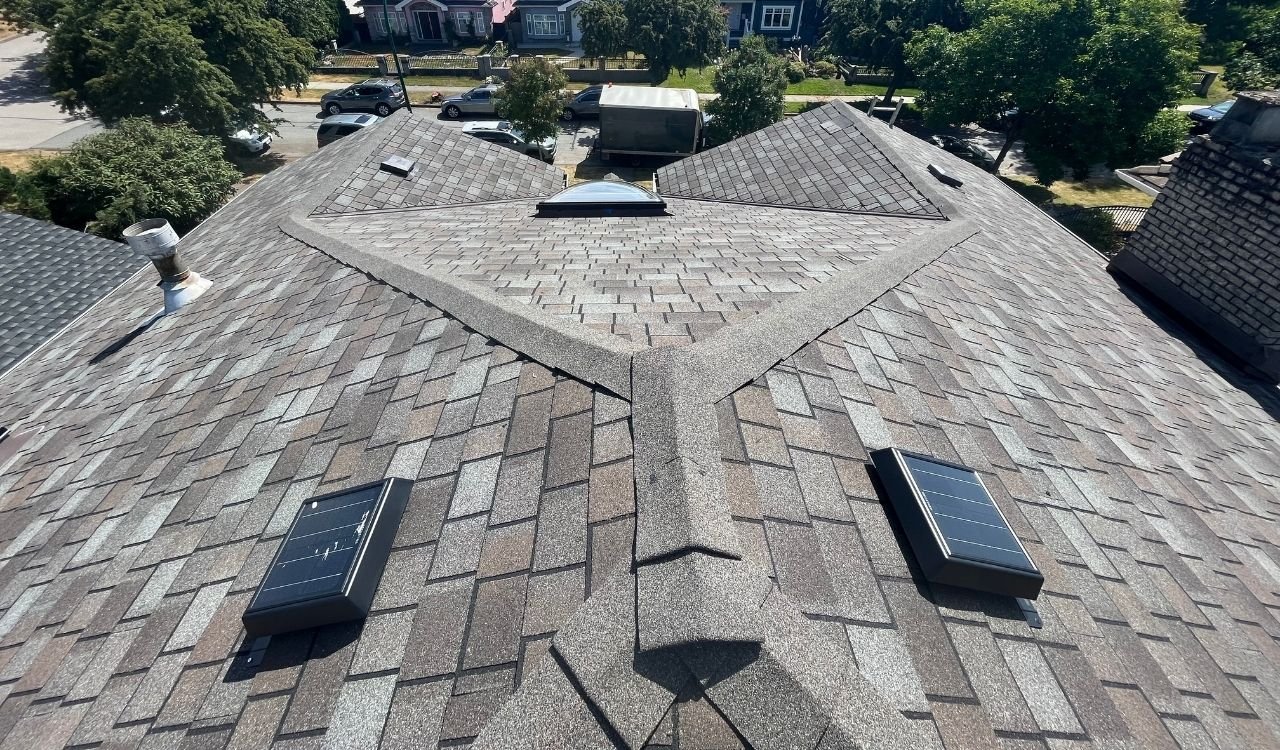
"Almost every emergency call we get during a windstorm traces back to something that was already a small problem — a lifted shingle, a loose flashing seam — before the wind ever showed up."
— Scarlet Roofing & Gutters, Storm Response TeamSigns Your Roof May Have Taken Storm Damage
After a significant windstorm, it's worth doing a visual check (from the ground — we'll get to why that matters) for these signs:
- Missing or visibly lifted shingles, especially near ridges, hips and edges where wind uplift is strongest.
- Granules collecting in gutters or at downspout outlets, which can indicate impact damage or accelerated shingle wear.
- Dented or dislodged flashing around chimneys, vents and skylights.
- New water stains on ceilings or walls that weren't there before the storm.
- Debris on the roof — branches or other material that landed during the storm and may have caused impact damage even if it's since rolled off.
Stay Off The Roof After A Storm
Wet, wind-affected shingles are more slippery and less stable underfoot than usual, and it's easy to miss loose or lifted sections until it's too late. Do your check from the ground with binoculars if needed, and leave the up-close inspection to a professional with the right safety equipment.
What To Do If Your Roof Is Actively Leaking
If you notice active water intrusion during or immediately after a storm, here's the order of operations we recommend:
- Contain the water inside. Move furniture and valuables out of the way, and place a bucket or container under the leak. If water is pooling in a ceiling light fixture or bulging drywall, it's worth carefully puncturing a small drainage hole to relieve pressure and prevent a larger ceiling collapse.
- Document the damage. Photos of the leak, any visible exterior damage, and the affected interior area will help significantly if you end up filing an insurance claim.
- Call for an emergency assessment. Active leaks should be treated as priority calls. In most cases we can inspect within 24–48 hours and put a temporary fix in place the same visit if conditions allow.
- Avoid DIY roof repairs in active weather. Getting on a wet, windy roof to attempt a repair yourself is one of the more common ways homeowners get hurt after a storm. A temporary interior fix and a professional exterior repair is a safer sequence.
A Note On Insurance Claims
Most home insurance policies in BC cover sudden storm damage, though coverage details and deductibles vary by provider and policy. A few things that make the claims process smoother:
- Photograph the damage as soon as it's safely possible, both close-up and from a wider angle showing context.
- Keep a copy of any inspection report or repair estimate, since insurers typically want documentation of both the damage and the recommended fix.
- Avoid making permanent repairs before your insurer has had a chance to assess the damage, where possible — temporary measures to stop further damage are usually fine and often expected.
We're glad to provide a detailed, photo-documented report for any storm damage assessment, which many homeowners use directly in their insurance claim.
Prevention Is Still Cheaper Than Repair
The single most effective thing you can do to limit storm damage is address small issues before storm season starts. A pre-winter inspection typically costs a small fraction of even a modest emergency repair, and it gives our crew the chance to catch the kind of minor wear — a loose shingle, a gap in flashing sealant — that turns into a major leak the next time the wind picks up.
If you'd like a pre-storm inspection or need an emergency assessment after recent weather, our crews serve Maple Ridge, Richmond, Vancouver and the surrounding Lower Mainland. Learn more about our roof repair & maintenance services, or call us directly if you're dealing with an active leak right now.